
Digital Dive Log Revolution: The Complete Guide to Modern Scuba Diving Documentation

Otto Paakko
Founder of Deepbluecoast

Matteo Beltrame
Founder of Depthlog
31 Jan 2025
4 min read
For many divers, especially those new to the sport, logging dives might seem like a tedious administrative task – something required for certification and then quickly forgotten. This couldn't be further from the truth.
A well-maintained diving logbook is your personal underwater journal, performance coach, and safety guardian all rolled into one.
Think about your favorite dive. Perhaps it was that magical moment when you first encountered a manta ray, or when you successfully navigated through challenging currents. Now imagine having not just the memory, but a detailed record of the conditions that made that dive possible: the perfect weight configuration that gave you ideal buoyancy, the exact exposure suit that kept you comfortable, the depth at which you found that sweet spot of neutral buoyancy.
This is the power of a diving logbook.
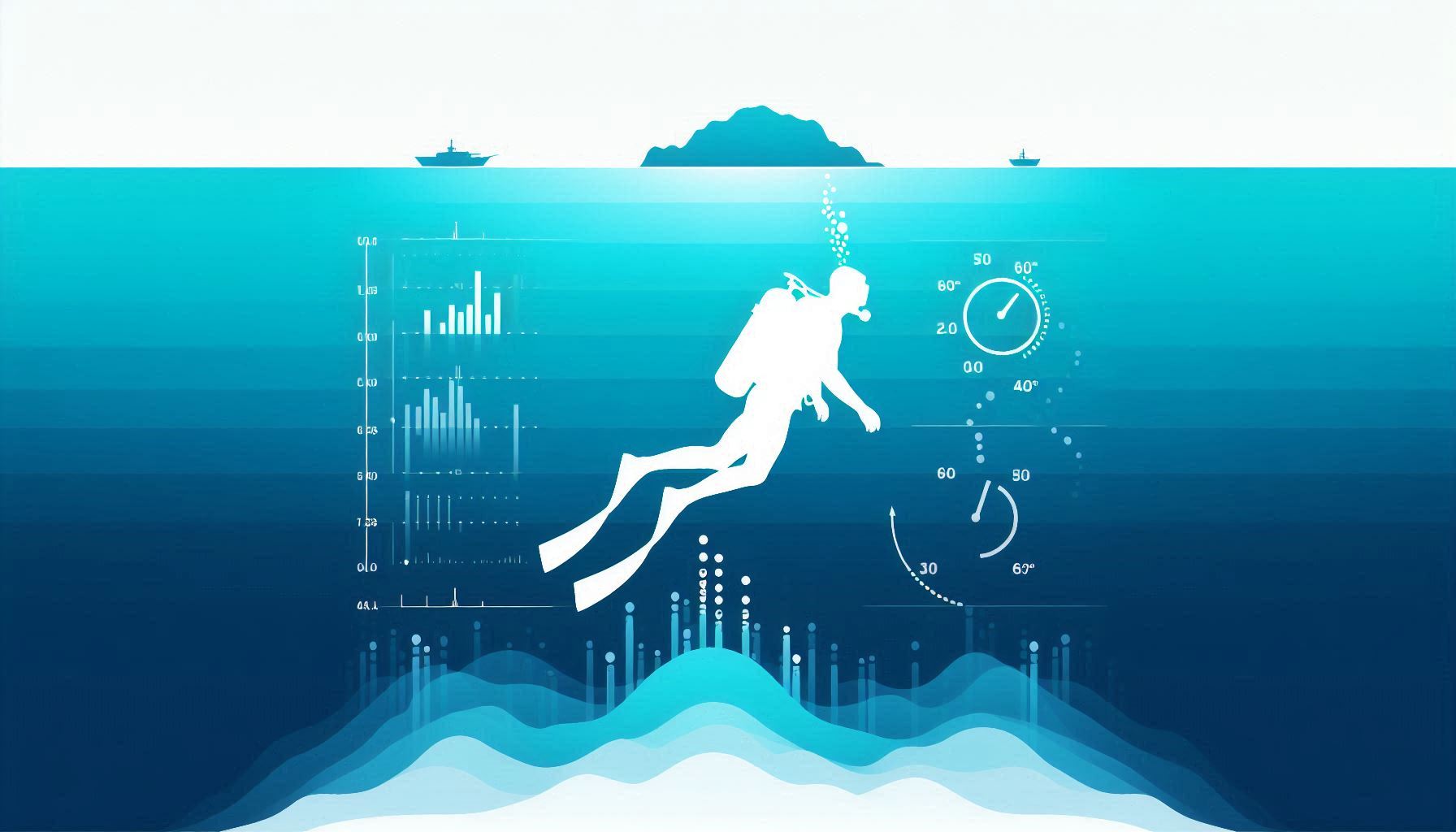
Your logbook serves as a mirror reflecting your evolution as a diver. By meticulously recording each dive, you create a powerful tool for self-improvement. Consider your air consumption – one of the most critical aspects of diving. By tracking this metric across different dives, you can observe how your breathing efficiency improves over time, how it varies with depth, and how different conditions affect your air usage.
This data becomes invaluable when planning future dives. It's like having a personal diving coach who knows your every strength and area for improvement.
Beyond personal development, your logbook is your diving resume. It tells the story of your underwater journey, documenting every skill mastered, every environment explored, and every challenge overcome.
This documentation becomes crucial when attempting technical dives or pursuing advanced certifications. Dive operators and instructors can quickly assess your experience level and comfort in different conditions, ensuring you're properly matched with dives that suit your capabilities.
The safety implications extend beyond qualification. By recording details about equipment configurations, weights used, and environmental conditions, you create a reliable reference for future dives.
This information can be life-saving when diving in similar conditions or when returning to a site after a long interval.
The human memory is fascinating but fallible. Years after a dive, you might remember the excitement of seeing a whale shark, but what about the specific conditions that made that encounter possible?
A detailed logbook preserves these precious details – the time of year, the water temperature, the current conditions, even the name of the dive guide who knew exactly where to look.
These records become increasingly valuable as you accumulate more dives and visit diverse locations. They help you plan return trips, recommend sites to fellow divers, and relive your adventures with surprising clarity.
Traditional paper logbooks have been the standard for decades, carrying with them a certain nostalgic charm.
There's something satisfying about that physical signature from your dive master, the stamps from different dive centers, and the ability to flip through pages of adventures. However, this traditional approach comes with significant limitations that can impact both safety and enjoyment of the sport.
The first wave of digital solutions attempted to address these issues but introduced new challenges. Many applications prioritized technical functionality over user experience, resulting in complicated interfaces that discouraged regular use.
Desktop-only solutions made it difficult to log dives on the go, while limited cloud synchronization meant data remained trapped on single devices. These applications, many of which haven't kept pace with modern technology, left divers wanting more.
Web-based platforms now offer comprehensive solutions that transform how we track our diving journey.
With automatic statistics calculation, easy sharing capabilities, global dive mapping, and secure certification storage, these platforms eliminate the hassles of traditional logging methods while adding powerful new features.
Whether you're planning your next dive trip, analyzing your performance, or simply wanting to share your underwater adventures with friends, modern diving platforms make it effortless to take your diving experience to the next level.
Related articles
Otto Paakko
Founder of Deepbluecoast
Matteo Beltrame
Founder of Depthlog

Fabio Beltrame
M.Sc. Aerospace Engineering

Matteo Beltrame
Founder of Depthlog